


🕋🔍 Islam’s One God Is Still an Idol
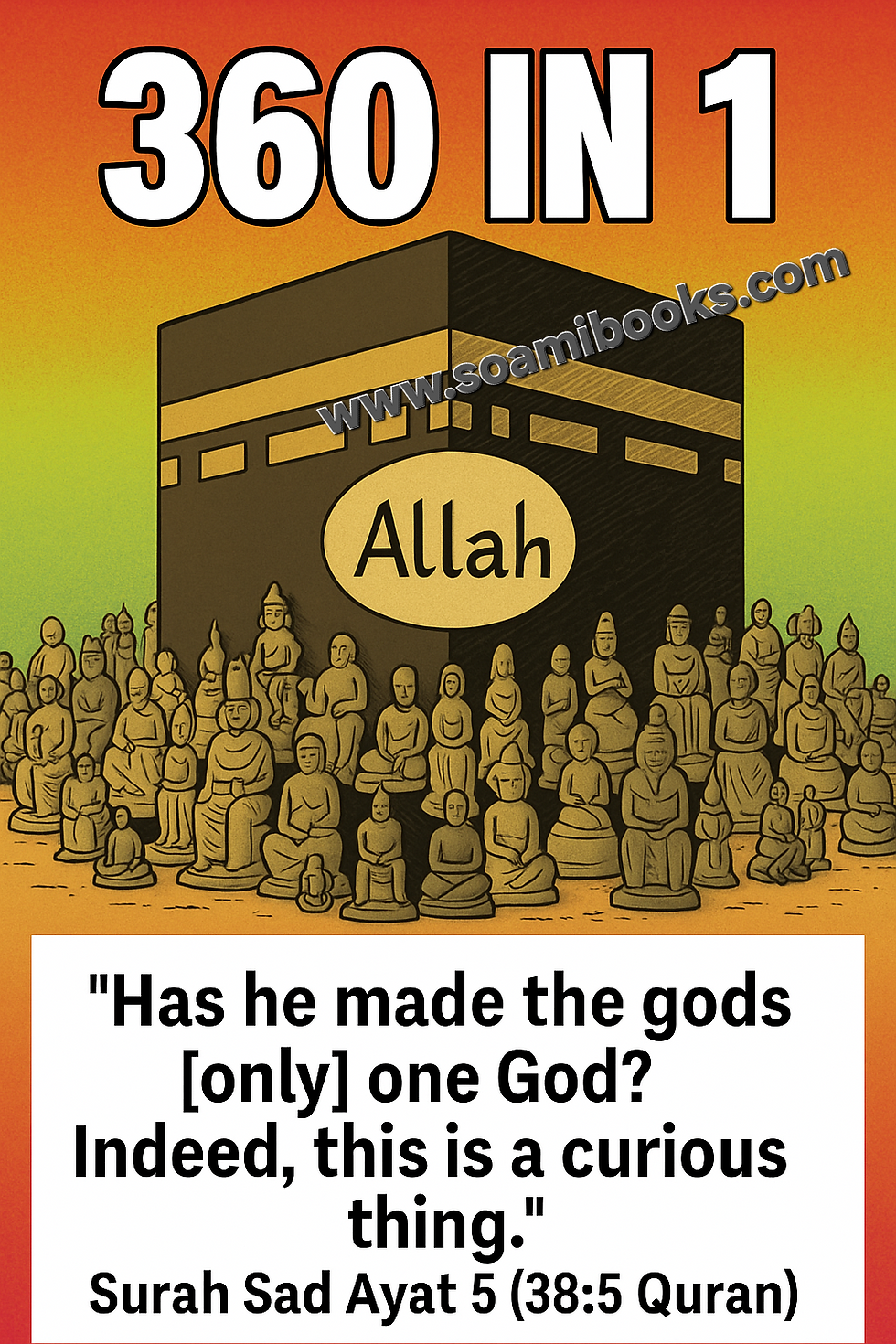
“Has he made the gods [only] one God? Indeed, this is a curious thing.” – Surah Sad 38:5 🕌
🔎 Surah Sad 38:5 – Not a Revelation, But a Confession of Paganism
Arabic: أَجَعَلَ ٱلۡأٓلِهَةَ إِلَٰهٗا وَٰحِدًاۖ إِنَّ هَٰذَا لَشَيۡءٌ عُجَابٞTransliteration: Ajaʿala al-ālihata ilāhan wāḥidan inna hādhā lashay’un ʿujābTranslation (Sahih International): Has he made the gods [only] one God? Indeed, this is a curious thing.
This verse captures the reaction of the Quraysh pagans, who were shocked that Muhammad would reduce their entire pantheon of 360 gods to just one deity. But the irony is that the god Muhammad chose—Allah—was already a prominent idol in their midst. This isn’t monotheism in its purest form; it is selective paganism.
📝 Tafsir of Surah Sad 38:5 – Ibn Kathir & Maududi
Maududi: Recognizes the astonishment of the Quraysh but doesn’t acknowledge that Allah was already a god among many.
Ibn Kathir: Admits the conflict with pagan traditions, yet fails to examine the pagan origin of the deity that Muhammad elevated.
🛰️ Pre-Islamic Arabia: 360 Idols and One "High God"
Islamic sources themselves confirm that pre-Islamic Mecca was filled with idols. The Kaaba contained 360 idols, including:
Hubal – the chief idol of Quraysh
al-Lat, al-Uzza, and Manat – the so-called daughters of Allah
Allah – already acknowledged as the “High God”
“Narrated Abu Huraira: The Prophet said, 'May Allah curse the Jews and Christians for they built the places of worship at the graves of their Prophets.'" (Sahih al-Bukhari 435)
Yet, Muhammad kept the Kaaba, Black Stone, and pagan rituals such as circumambulation (Tawaf), merely redefining them under a new label.
⚡️ Nine Bold Truths About Islam's Pagan Origins
⚫️ Muslims deny being pagans, but many of their rituals—stone kissing, Kaaba circling, crescent moon usage—predate Islam.
⚫️ Muhammad did not introduce a new god. He simply chose Allah, a pre-existing idol, to be the only one worshipped.
⚫️ There was no religious revolution. The format of worship remained the same, but the focus was narrowed to one idol.
⚫️ Even the Qur'an confirms the pre-existence of Allah:
“If you asked them, ‘Who created the heavens and the earth?’ they would say, ‘Allah.’ ” — Surah Luqman 31:25 📖
⚫️ Islamic rituals mirror pre-Islamic customs. For example:
Tawaf (circling the Kaaba) 🕋
Hajj pilgrimage rituals 🧳
Fasting during Ramadan – derived from pre-Islamic practices 🌙
⚫️ Hadith confirms pagan practice carried over:
“Narrated Aisha: The Prophet used to love to perform all his deeds starting from the right side...” (Sahih al-Bukhari 168)
⚫️ The Black Stone was revered before Islam.
“The Black Stone came down from Paradise whiter than milk, but the sins of the sons of Adam made it black.” — (Jami` at-Tirmidhi 877)
⚫️ The Kaaba was a pagan shrine.
“During the Jahiliyyah, the Quraysh used to worship at the Kaaba, performing the same rituals.” — (Ibn Ishaq, The Life of Muhammad)
⚫️ Muhammad lived and died in the pagan framework he claimed to challenge. His methods, places, objects, and symbols remained rooted in idolatrous traditions.
🏛️ Islam's Monotheism: Genuine or Just Rebranded Polytheism?
“Have you seen al-Lat and al-‘Uzza? And another, the third [goddess], Manat?” — Surah An-Najm 53:19-20 ❌
This verse references the three goddesses worshipped alongside Allah. Though the Qur'an later rejects them, it proves that the worship of Allah was not exclusive in Mecca until Muhammad's reforms.
“And when it is said to them, ‘Prostrate to the Most Merciful,’ they say, ‘And what is the Most Merciful?’ — Surah Al-Furqan 25:60
The Quraysh didn’t even recognize “Al-Rahman,” revealing that Islamic names for Allah were not universally accepted even among Arabs.
🚫 False Monotheism is Still Idolatry
Reducing many idols to one idol does not equal true monotheism. Islam preserved the objects, places, times, and practices of Arab paganism, only rebranding them under the banner of Allah.
“And most of them believe not in Allah except while they associate others with Him.” — Surah Yusuf 12:106 📛
The Qur'an accuses the people of believing in Allah while still committing shirk (idolatry). Yet Islam repeats this pattern by exalting a pagan idol and retaining pagan rites.
✨ Conclusion: Islam's "One God" is a Legacy of Idolatry
When we dig beneath the surface, the evidence is clear:
Islam is not a new revelation – it is a consolidation of pre-Islamic Arabian polytheism. 🐪
Allah was not introduced by Muhammad – he was extracted from a crowded pantheon.
Islamic rituals are not Abrahamic – they are rebranded pagan traditions. 🔄
The very verse Muslims use to prove monotheism (Surah Sad 38:5) ironically confesses the polytheistic origins of their faith.
“Has he made the gods [only] one God? Indeed, this is a curious thing.” – Qur'an 38:5 🤔
🔍 Final Thought: Is Islam Really Monotheistic? Or Is It Paganism in Disguise?
🔍 Look at the evidence. 🕋 Follow the origins. 📖 Read the verses.
Islamic monotheism is not rooted in prophetic truth, but in pagan compromise. It is time for seekers of truth to reject idols in all forms—even those masked in monotheism.


